PractiTest has two types of issue integration with YouTrack:
- Two-Way Integration: advanced integration that syncs and updates information between the two systems. With this integration, you can report issues from PractiTest runs directly to YouTrack, and PractiTest allows YouTrack to update PractiTest whenever the subject, status, or descriptions are modified.
- One-Way Integration: standard integration where you can report issues and data from PractiTest to YouTrack. Once you click on the ‘Fail & Issue link’ in a test run, it will open a new bug form in YouTrack, with all the data (including steps and actual results) already pre-entered.
YouTrack Two-Way Integration
The integration between PractiTest and YouTrack allows you to share information between these two systems. You can import and link issues from YouTrack as issues in PractiTest. Testers can also use this integration to report bugs from a Test Run in PractiTest directly into YouTrack.
The issues imported into PractiTest will automatically be linked back to the original issue in YouTrack. Any updates made to an issue in YouTrack will be synchronized and updated in PractiTest, and vice versa. This also applies to requirements, which can be imported from YouTrack into PractiTest.
Note: YouTrack integration is available for YouTrack Cloud instances and the latest on-premise version.
Configuration
PractiTest Account Settings- To create the API token, follow these instructions. Note that only the YouTrack scope is required. Once the token has been created, copy it.
Important: The YouTrack API token must belong to a user with the System Admin role, or to a user with the Project Admin role with Global scope.
Note: to create and update entities in all the projects you’d like to integrate between PractiTest and YouTrack, you will need to have a YouTrack user account with access and permissions.

2. Paste the YouTrack API token into PractiTest. Go to Account Settings → Integrations → Choose ‘YouTrack (by JetBrains)’ and click ‘Create token and continue with YouTrack integration’. Next, insert the YouTrack API token into the box.

3. Add your YouTrack instance URL, for example: https://example.myjetbrains.com/youtrack.
4. Click ‘Update and Get Projects’. This will create a new workflow in your YouTrack account. Next, go to YouTrack → Settings → Workflows → Update PractiTest → add relevant projects.

Enabling YouTrack Impersonation
YouTrack impersonation allows PractiTest users to perform YouTrack-related actions according to their own YouTrack permissions.
This helps ensure that actions such as importing items, reporting issues, or updating synced fields are performed based on the user’s permissions in YouTrack, rather than only the integration administrator’s permissions.
Note: YouTrack impersonation is supported for YouTrack version 2026.2 and newer. Older YouTrack versions do not support OAuth Client Registration and will not display the impersonation configuration fields. For more information, please refer to YouTrack OAuth Client Documentation.
Configure PractiTest as an OAuth Client in YouTrack
This is a one-time setup performed by an account owner.
Step 1: Copy the Redirect URI from PractiTest
In PractiTest:
- Go to Account Settings → Integrations
- Open the YouTrack integration settings by clicking on the Pencil icon
- Tick the Use User Impersonation checkbox to enable it
- Copy the read-only Redirect URI field

Step 2: Register PractiTest in YouTrack
In YouTrack:
- Click on Administration → Access Management → OAuth Clients
- Click New OAuth Client on the top right side
- Register PractiTest as a new external application

Use the following configuration:
- Name: PractiTest (or any other name you prefer)
- Home URL (Based on your selected data center location):
- US data center: https://prod.practitest.com
- EU data center: https://eu1-prod.practitest.app
- AU data center: https://au1.practitest.app
- Authorization Code flow: Enabled
- Require PKCE: Disabled
- Redirect URI: Paste the Redirect URI copied from the previous screen in PractiTest
Note: Make sure Require PKCE is disabled. Leaving this option enabled may prevent the token exchange from completing.

After saving the OAuth client, YouTrack will generate a Client ID and Client Secret.
Step 3: Add the YouTrack OAuth Credentials to PractiTest
In YouTrack:
- Copy the generated Client ID
- Click on the ’Change’ generate the Client Secret, and then copy it
In PractiTest:
- Go back to YouTrack integration settings Account Settings → Integrations
- Clicking on the Pencil icon
- Paste the Client ID and Client Secret into the relevant fields
- Click ‘Save OAuth Client’

Connecting Individual YouTrack Accounts
After the administrator setup is complete, individual users will be asked to connect their YouTrack account the next time they perform a YouTrack-related action from PractiTest, such as importing YouTrack items or using Fail & Issue.
The user connection is separate from the one-time administrator setup and allows PractiTest to perform YouTrack actions according to each user’s own YouTrack permissions.
PractiTest Project Settings
Now that you have created the integration between your PractiTest and YouTrack accounts, you can continue to defining the integration for individual project settings.
Mapping YouTrack Projects & Entities
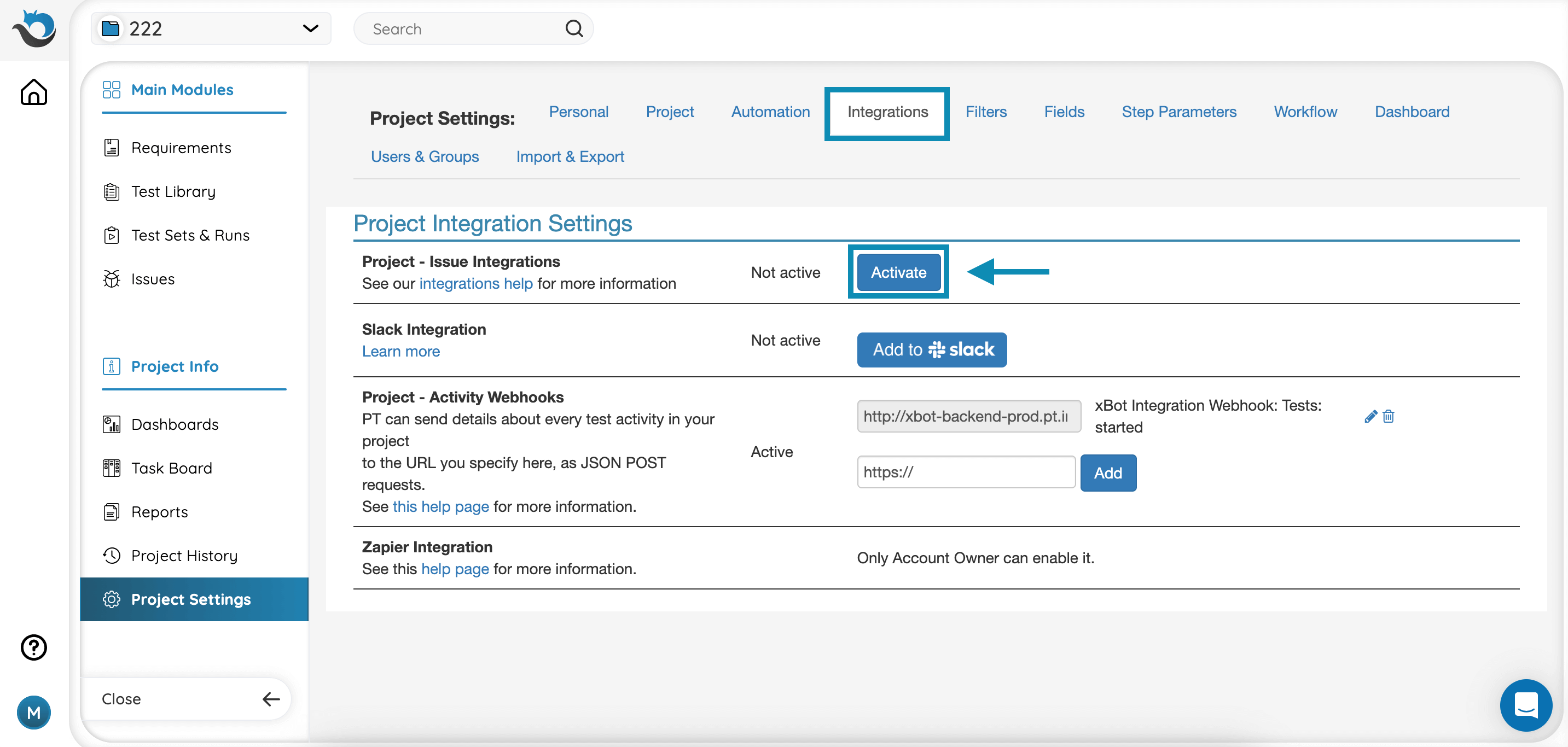
In PractiTest, go to Project Settings → Integrations. Click Activate in the issue integration section, and then click Activate again on the YouTrack integration configured in your account.
You will be redirected to the General tab, where you can select the YouTrack projects you want to sync with the PractiTest project. You can connect one or multiple YouTrack projects to a single PractiTest project.

After selecting the YouTrack project or projects, you will see two configuration sections:
- Enable Requirement Synchronization
- Enable Issue Synchronization
These sections allow you to define which YouTrack work item types will be synced into PractiTest entities. If you want to change the mapping, click the mapped work item field in the Requirement or Issue synchronization section, and select the desired YouTrack work item types.
If you do not want to sync Requirements or Issues from YouTrack into PractiTest, you can disable the synchronization by toggling off the relevant section.
PractiTest Internal Issues
At the bottom of the configuration screen, you can choose whether PractiTest users are allowed to create internal Issues that are not synced to YouTrack.
To enable this option, check the Allow to create Issues in PractiTest that are not linked to Integration box.
When this option is enabled:
- Users can create Issues directly in PractiTest without syncing them to YouTrack.
- Both synced and internal Issues can coexist in the project.
If you allow users to create PractiTest internal Issues, you can choose to display the PractiTest ID for all Issues, including Issues synced from YouTrack. If you do not allow users to create internal Issues in PractiTest, PractiTest will display the YouTrack ID for each synced Issue.
Mapping Fields Between YouTrack and PractiTest
PractiTest allows you to map fields between YouTrack and PractiTest, enabling information to sync automatically between the two systems. Field mapping helps ensure that important data remains aligned across both platforms and reduces the need for manual updates.
Configure Field Mapping
To configure field mappings:
- Go to Project Settings → Integrations
- Open the YouTrack Project Mapped Fields tab
- Select the YouTrack field you want to map
- Select the corresponding PractiTest field
- Click Update Settings to save the mapping

Once a field mapping is configured, PractiTest will synchronize values between the mapped YouTrack and PractiTest fields according to the integration settings.
Workflow
Fail & Issue – Reporting an Issue to YouTrack
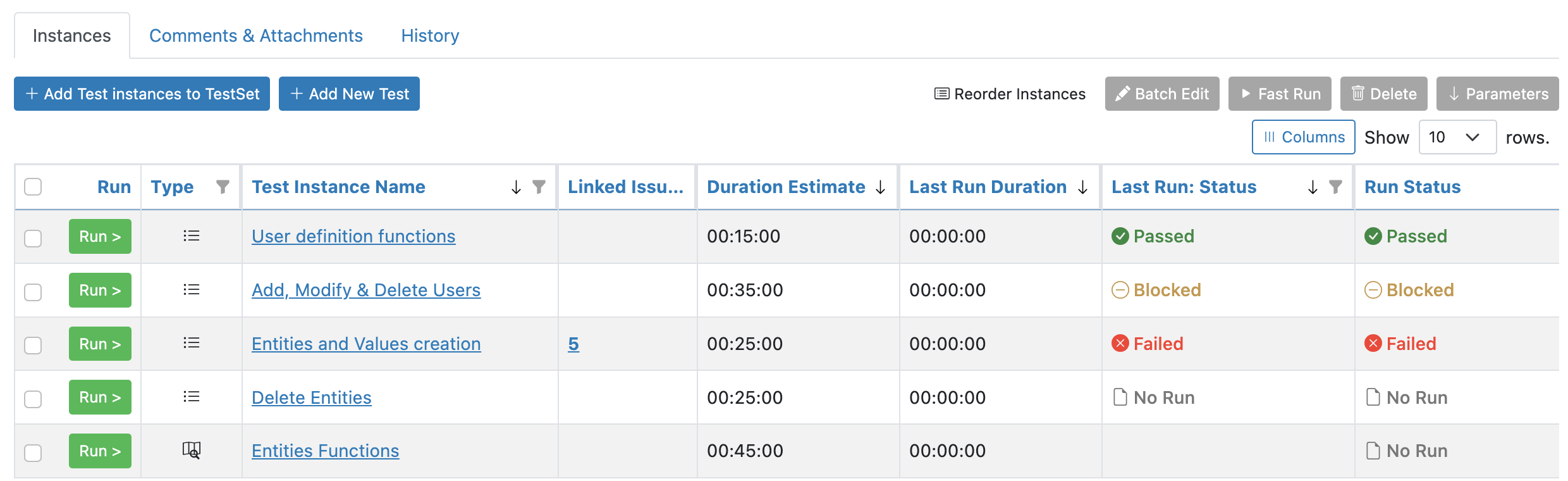
After enabling the YouTrack integration, you can create issues from failed test runs using the ‘Fail & Issue’ feature inside PractiTest’s Test Run.- Go to the ‘Test Sets & Runs’ tab and select a Test Set.
- Choose an instance to run.
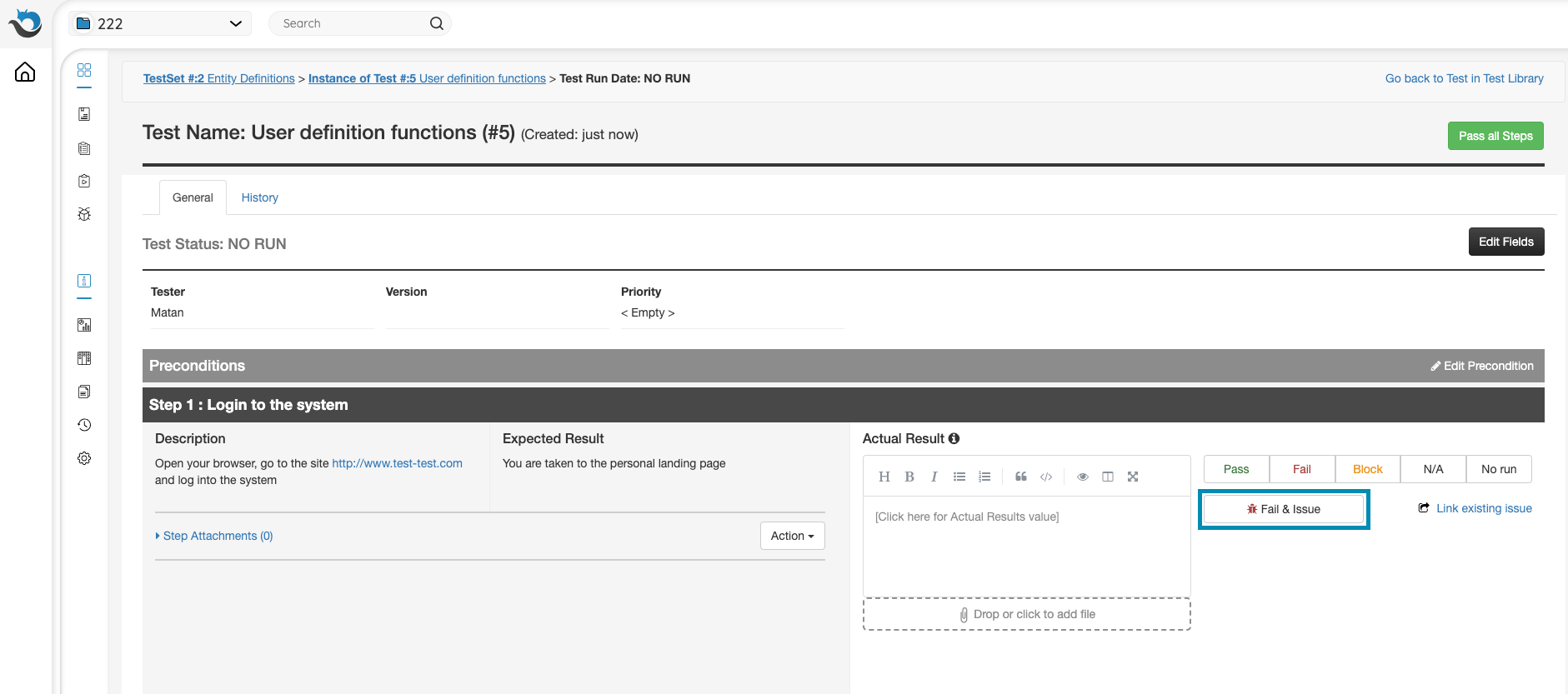
- Click ‘Fail & Issue’ under the relevant step.

4. You can edit the issue fields or leave it with the default values.
After submitting, the YouTrack issue will appear and will be connected to a new PractiTest issue.
Note: after creating a new issue, if you don’t see all of your YouTrack projects, go to the Account Settings > Integrations tab, then click the ‘Update and Get Projects’ button.
Importing Requirements
Click on the down arrow next to the ‘New Requirement’ button and select ‘Import a Requirement’. This will allow you to link any imported issue to your Test Cases and create traceability links between them.Sync an Issue
If you want to import an existing Issue from YouTrack into PractiTest, click on the down arrow next to the ‘New Issue’ button, then select “Sync a new Issue from YouTrack”.The modal box will appear. Paste the issue ID and click ‘Synchronize’:

YouTrack One-Way Integration
To configure the YouTrack integration with PractiTest, follow these steps.
Configuration
- In PractiTest, go to Project Settings → Integrations, and activate the Issue Integration by clicking the ‘activate’ link.
- Select “YouTrackOneWay” from the Bugtracker dropdown list.
Once you’ve chosen YouTrack, enter the URL Prefix that will be used by PractiTest to connect to your YouTrack installation. This URL will have access to create bugs in YouTrack.

Click the ‘Create Issue integration’ button to activate the changes.
Workflow
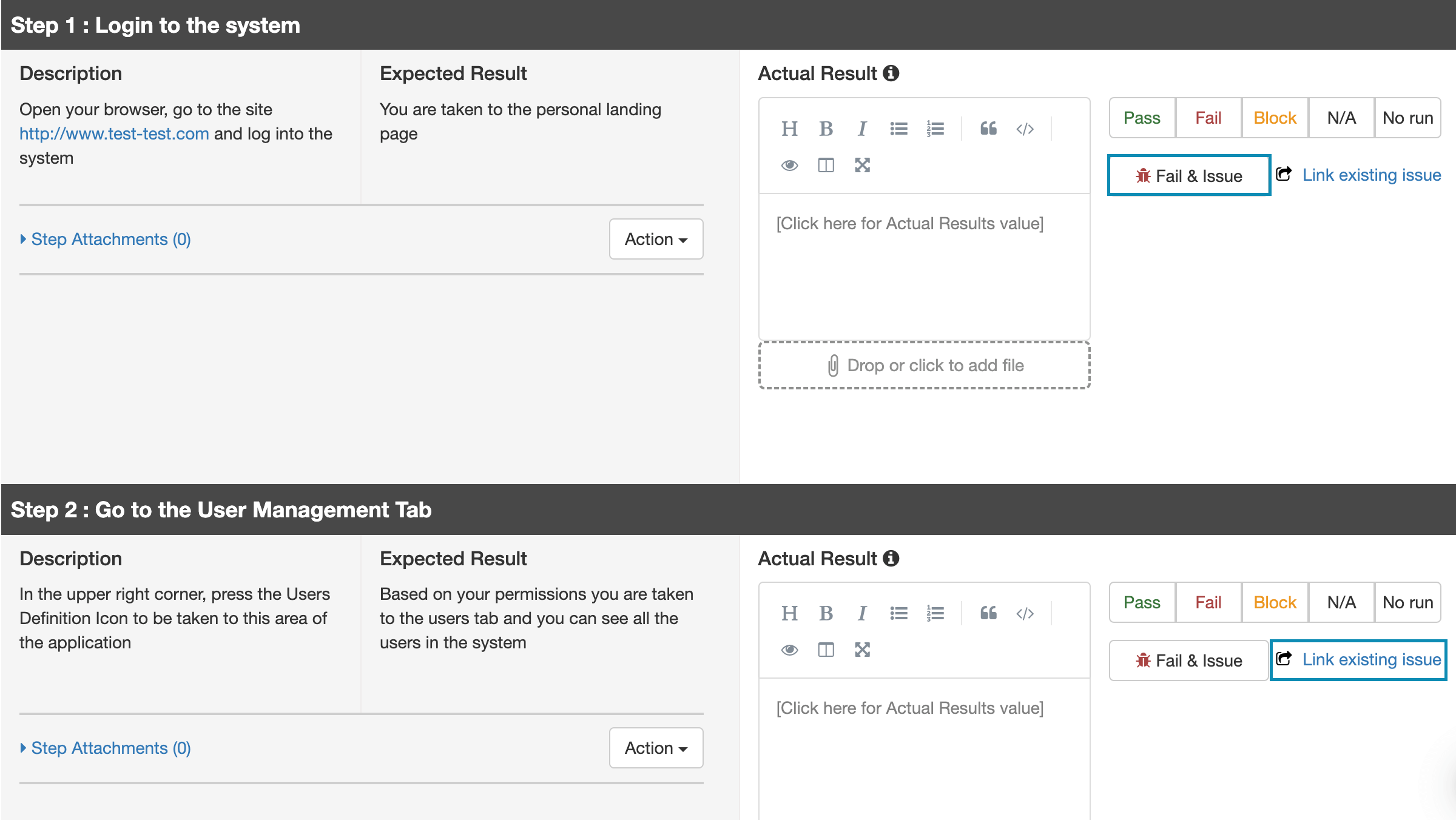
- Run your tests normally. When you encounter an issue, click the Fail & Issue Icon.
- A new browser tab or window (based on your browser’s configuration) will open, displaying your YouTrack new bug page. If you have configured your browser to remember your username and password, it will log directly into the screen where you can report your issue.
- After reporting the issue, take note of the new YouTrack ID. Return to PractiTest and enter this ID in the Issue ID field. Click the ‘Link existing issue’ button. You can enter multiple issues at once by separating them with commas or spaces.
- The YouTrack Issue will be linked to the test step. Clicking the issue ID will open it in a new window on your YouTrack instance.